


I document spaces with dark history. In miniature.
The Architecture of a Moment

I don’t recreate crime scenes.
I reconstruct perspective.
These works sit at the intersection of narrative and structure—
where storytelling becomes spatial.
Each build is not just a setting—
but an environment for observation.
Details are not decorative.
They are decisions.
They guide the eye.
They shape interpretation.
They ask the viewer to look again.
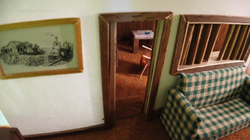
Interior, kitchen area: The Wonderland House
*Note: All models labeled as "Iteration 2" are brand new, secondary models and are separate from their first iterations
EXHIBITION


TRANSFORMATIONS: NEW PERSPECTIVE ON THE ART OF MINIATURES
A selection of these works was exhibited publicly
from October 2023 through May 2024.
Presented within a museum setting,
the pieces shifted from private construction to shared experience—
inviting viewers to engage with scale, detail, and narrative in real time.
Constructed as physical spaces, these environments are held in place—
observed from a distance.
Exhibited at The National Museum of Toys & Miniatures
Kansas City, Missouri
Exhibited Pieces: The Wonderland House ·The H.H. Holmes Murder Mansion (Iteration 2) · The Lizzie Borden House (Iteration 1)
EXAMINED
BROADCAST APPEARANCE
A closer look in a narrative framing within broadcast context.
Featured in Dark Marvels (S1, Ep2: “Temples of Doom”) — The History Channel, aired July 2023
On-camera contributor, appearing in two segments—examining the
second-floor spatial structure and closing sequence
The H.H. Holmes Murder Mansion (Iteration 2) is used as an exterior reference and appears within the interview environment
Viewed, then articulated—
Observation became participation.


SPATIAL
EXTENSION


FROM ONE SPACE TO ANOTHER
No longer fixed, the structure opens—
transitioning from something viewed
to something navigated—
it is entered.
The viewer moves through the same constraints defined in miniature:
thresholds, sightlines, and points of access.
What was once observed at a distance
becomes immediate.
Built from the same reconstructed environments,
the spaces retain their original logic—only the scale changes.
Crafting Crimes has been recognized across immersive media and broadcast, including a Juried Emmy Award for Outstanding Innovation in Emerging Media Programming at the 78th Emmy Awards, and a 2026 Webby Award for Best VR Headset Experience.
Additional presentations and releases have taken place within major cultural and industry contexts, extending the work beyond the studio and into public discourse.
Featured Source Material Pieces: The Wonderland House · The Lizzie Borden House (Iteration 2) · The Louvre Salon Carré & Stairwell (Iteration 2) · Vincenzo Peruggia's Paris Room (Iteration 2)
SELECTED
RECREATIONS
These recreations are built from documented environments—
floor plans, images, and recorded accounts.
They do not attempt to resolve the events,
but to clarify the spaces in which they occurred.
 |
|---|
 |
 |
 |
 |
 |
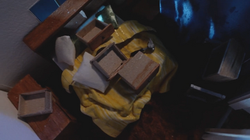
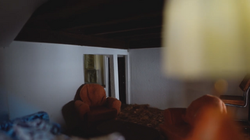
The Lizzie Borden House (Iteration 2) Video Essay & Full Build Videos Coming Soon!
An examination of proximity within a domestic interior.
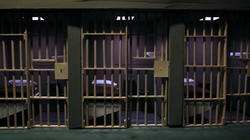
A double homicide inside the Borden residence in Fall River, Massachusetts—where room adjacency and restricted sightlines complicate any singular account of movement through the home.
 |
|---|
 |
 |
 |
 |
 |
 |
 |
 |
 |
 |
 |
 |
 |
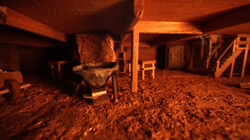
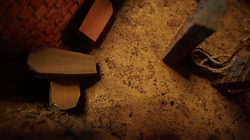
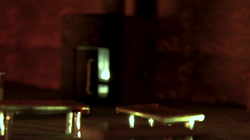
The Wonderland House
A reconstruction of a space shaped by conflicting accounts.
A quadruple homicide tied to the Wonderland Avenue residence
in Los Angeles—where witness testimony, physical evidence, and
narrative timelines fail to fully reconcile.
 |
|---|
 |
 |
 |
 |
 |
 |
 |
 |


The H.H. Holmes Murder Mansion (Iterations 1 & 2)
An exploration of architecture as a system of control.
Completed just prior to the 1893 Chicago World’s Fair, the building is described as having concealed passages, locked rooms, and disorienting layouts—widely believed to be designed to manage access, visibility, and escape—complicating navigation and limiting how the space can be fully understood.
 |
|---|
 |
 |
 |
 |
 |
 |
 |
The Dating Game Killer
A recreation of a familiar broadcast environment.
A 1978 episode featuring Rodney Alcala, recorded during the period
of his known killings—where performance, perception, and reality
briefly converge on a public stage.
The work may not answer the questions—
but it creates a way to understand the space.
CONSTRUCTED SPACE